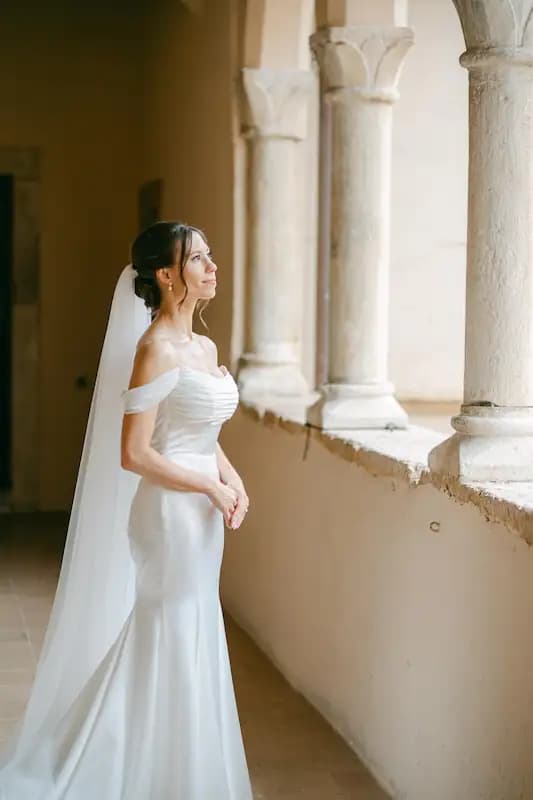
Umbria is "almost like Tuscany, but with far fewer tourists": medieval castles, Romanesque abbeys, villas and hamlets looking out over hills and olive groves. Having photographed plenty of weddings here, I've gathered the venues I love most, sorted by type — with a practical guide to budget, seasons, legal matters and timelines. It's not a list copied from a catalogue: these are places I know, many of which I've lived with a camera in hand from dawn to late night.
Why choose Umbria
Privacy, authenticity and settings for every style, a few hours from the main airports. Indicative driving times: Rome 2–3 hours (Fiumicino and Ciampino), Florence 2–2.5 hours (Peretola airport), while Perugia San Francesco d'Assisi airport is half an hour from the more central venues and has flights to some European cities. The most sought-after venues book up as much as two years ahead. To get your bearings, the official portal is Umbria Tourism.
Castles
- Castello di Montignano (Massa Martana) — 40–175 guests, licensed for civil ceremonies, panoramic pool, wellness centre and olive grove; I've photographed parties here that came alight at sunset among the medieval walls.
- Castello di Ramazzano – Tenute Aliani — up to 250 guests, a 12th-century structure, frescoed halls and cellars for tastings.
- Castello di Rosciano — up to 300 guests, a national monument, with a view sweeping from Perugia to Assisi.
- Castello di Titignano — up to 200 guests, a medieval hamlet overlooking Lake Corbara, at once rustic and elegant.
- Castello di Petrata (Assisi) — a 14th-century castle with a view of the Basilica, perfect for celebrations spread over several days.
- Tenuta di Forte Sorgnano — a 10th-century keep with a panoramic terrace over the Tiber Valley.
Abbeys and monasteries
- Abbey of San Pietro in Valle (Ferentillo) — an 8th-century monastery between the Marmore Falls and Spoleto, Romanesque cloisters and unforgettable morning light; one of my favourite settings of all.
- La Badia di Orvieto — a Benedictine abbey founded around the year 1000, now a relais, at the foot of the tufa cliff.
- Monastery of Santa Margherita (Todi) — a 12th-century building with a view of the Temple of Consolation.
- San Pietro Sopra le Acque (Massa Martana) — an ancient complex with a natural amphitheatre and an old-growth wood, ideal for ceremonies immersed in green.
Resorts and exclusive villas
- Borghi dell'Eremo — a 500-hectare estate between Umbria and Tuscany, with two separate ceremony locations.
- Borgo Bastia Creti — a 14th-century hamlet with a 360° view, ideal for intimate parties (up to around 30 guests).
- Borgo della Marmotta — a medieval hamlet between Spoleto and Trevi, with a wellness area and pool.
- Castello di Solfagnano — an 1100s structure with a private chapel and panoramic terraces.
- Relais Tenuta del Gallo (Amelia) — a working vineyard, an authentic farmhouse, Italian gardens and cellar tastings; perfect for intimate, multicultural weddings.
Hamlets and charming estates
- Borgo San Faustino (Orvieto) — a 900-hectare estate with zero-mile cuisine and a little wood that, at golden hour, looks like a natural cathedral.
- Villa Laura Vogorides Ruspoli — a princely residence with 18th-century gardens and reception halls.
- Borgo Petroro, Villa Villamena and the estates around Todi and Montefalco — hamlets and villas for receptions of 60 to 200 guests, among vineyards and olive groves.
How to choose the right venue
Before "how beautiful is it", ask three practical questions: how many guests do you need to host (a venue for thirty clashes with a hundred and fifty, and vice versa); do they sleep on site or travel (a property with rooms simplifies everything); and is there a real indoor plan B as good as the outdoor one, in case of rain? The answers rule out half the options and save you months of indecision.
Legal matters in brief
In Umbria many venues and municipalities are licensed for the civil ceremony, even outdoors (Castello di Montignano is one example). For the religious ceremony you coordinate with the parish. The symbolic ceremony, with no legal value, gives maximum freedom: you sign the papers at the town hall and live the ceremony wherever you like. Foreign couples must obtain the nulla osta (certificate of no impediment) from their consulate: a good local planner handles the whole process.
Indicative budget
- Historic castles: €5,000–€25,000
- Abbeys and monasteries: €4,000–€15,000
- Exclusive resorts: €8,000–€20,000
- Villas and estates: €3,000–€12,000
- Catering: €80–€200 per person
- Professional photography: starting from a few thousand euros
These are ballpark figures: they vary a lot with season, day of the week and number of guests. A midweek or low-season wedding can cost considerably less.
Seasons
- Spring — landscapes in bloom, lower rates, changeable weather (keep the plan B).
- Summer — near-guaranteed sun and long days, but heat and high demand; go for evening ceremonies.
- Autumn — the atmosphere of the grape harvest, warm colours and ideal weather. My favourite season in Umbria.
- Winter — intimacy and contained costs, but few hours of light: everything moves earlier.
Guest logistics
Think about it early: well-spread accommodation (agriturismi and relais in the area), a shuttle if ceremony and reception are far apart or reachable only by gravel roads, and clear directions — the sat-nav, in the Umbrian countryside, sometimes loses its mind. A welcome dinner the evening before helps international guests settle in and turns the wedding into a little weekend together.
Timelines
- 18–24 months ahead — venue and date research, starting the legal process for foreign couples.
- 12–18 months — guest list, main suppliers (planner, photographer, caterer), accommodation.
- 6–12 months — menu, documents, transport, trials.
- 2–6 months — final confirmations, last site visit, definitive timeline.
Frequently asked questions
How far in advance should we book a venue in Umbria?
The most sought-after ones close 1–2 years ahead: better to move early, especially for high-season weekends (May, June, September). Photographer and planner should be chosen at the same time as the venue.
Can you hold legally valid civil weddings?
Yes, at several licensed venues (such as Castello di Montignano) and at municipalities; alternatively there's always the symbolic ceremony, with the papers signed at the town hall. Foreign couples must present the nulla osta from their consulate.
How do international guests get there?
The Rome and Florence airports are 2–3 hours by car; Perugia airport is about 30 minutes from the central venues. A shuttle or rental car solves getting around on site.
What's the best season to marry in Umbria?
Late spring and early autumn for weather and light; summer for guaranteed sun; winter for intimacy and savings. Each season has its own character.
Related articles
- The 3 most enchanting locations in Umbria
- Why to choose a wedding photographer in Umbria
- 5 tips for a stress-free wedding in Umbria
Looking for the perfect venue for your wedding in Umbria? Tell me what you have in mind: I'll help you choose — and then tell the whole story in images.