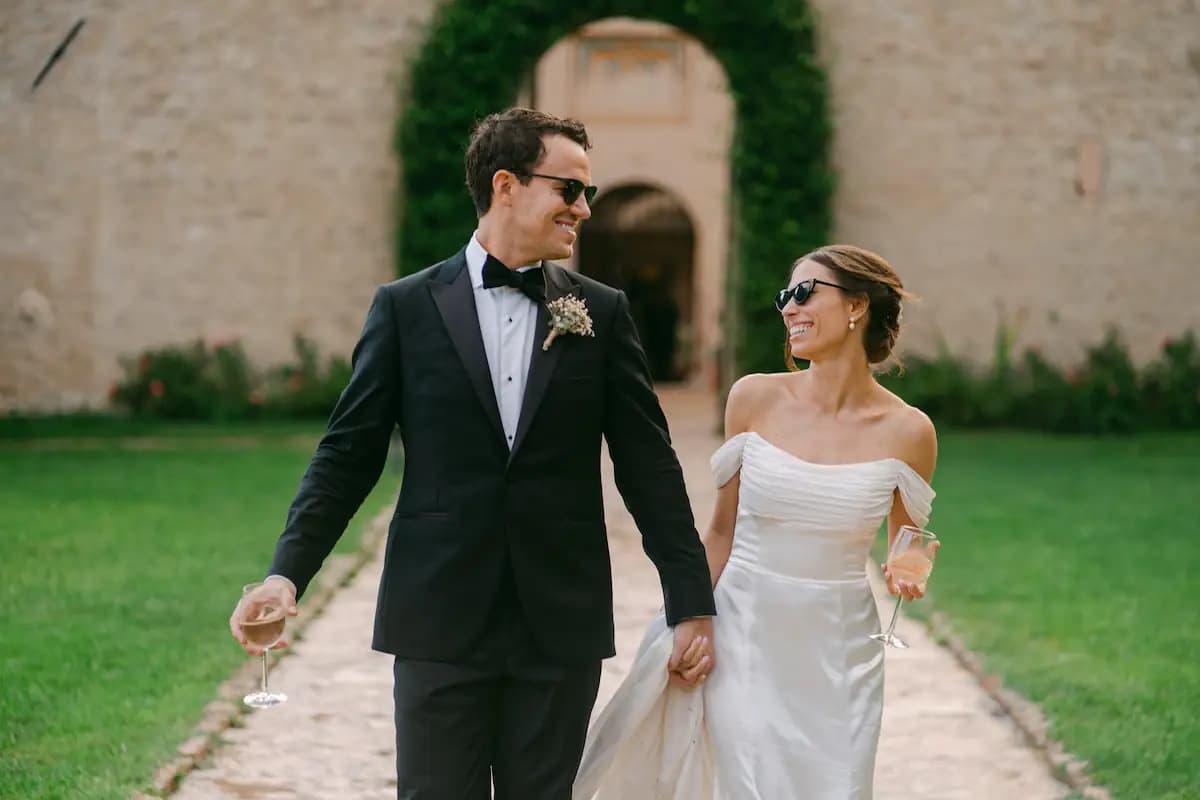
Italy is one of the most sought-after places in the world to get married, and after years spent photographing weddings across Umbria, Tuscany and Lazio I've stopped wondering why. Golden light that turns a wall of tufa stone to amber at seven in the evening, seventeenth-century villas, stone hamlets, olive groves, and a dinner that runs three hours and becomes part of the celebration: every corner is already a set. But turning all of that into images you'll still want to look at in twenty years takes a photographer who can read the place and, above all, the people. This is the guide I wish I'd handed the first couples who wrote to me from London or New York, when they didn't yet know where to begin.
Why get married in Italy
From the Renaissance elegance of Florence to the olive groves of Umbria, from Tuscan villas to the Amalfi Coast, Italy offers a variety of settings few other countries can match — which is why it sits at the top of destination-wedding lists on the official tourism portal Italia.it. But the real reason couples go home happy isn't the backdrop: it's the pace. Here a wedding isn't a stopwatch event, it's a long lunch with the people you love. The warm light of late afternoon, the architecture, the colours of the countryside and that very Italian way of letting moments stretch all work in your favour in every photograph. The hard part isn't finding a beautiful place — it's choosing someone who can truly tell its story, instead of turning it into a postcard.
What to look for in a wedding photographer in Italy
A portfolio tells you whether someone can shoot. A conversation tells you how they work. Here's what I look at when I recommend a colleague, and what's worth weighing up yourself.
Local knowledge
A local photographer knows what time the light reaches the cloister, where to take you for a portrait away from prying eyes, which gravel road to avoid with the guests' cars, and how to move through the often elastic timing of an Italian day. It isn't a detail: it's the difference between chasing the day and staying a step ahead of it.
A storytelling approach
The most precious images are rarely posed: they're your father's look as he sees you ready, the hands searching for each other during the vows, the grandmother discovering the porchetta at the aperitivo. Look for someone who photographs emotion, not just scenery. Check whether their work is full of real people or only perfect frames and stiff couples.
Experience with international couples
Handling time zones, guests arriving from far away, a best man who doesn't speak Italian and a timeline that actually works takes real experience with destination weddings. Ask how many foreign couples they've worked with and how they manage the planning at a distance.
Art and authenticity
Technique is a given: at this level everyone can expose and focus. What makes the difference is sensitivity — being invisible enough not to interrupt the moment, alert enough not to miss any of it. You'll see that quality more in the quiet frames of a reportage than in the cover shots.
Every region tells a different story
There's no such thing as "the most beautiful place in Italy": there's the right one for you. Here's how I see it, region by region.
- Tuscany — golden tones, cypress rows, Renaissance villas. The most iconic choice and the most requested: factor that into your budget and your calendar, which fills up early. Perfect for classic elegance if you don't mind a little crowd at the landmark spots.
- Umbria — my home base. Genuine countryside, olive groves, castles and abbeys, a privacy Tuscany has partly lost. Gentler prices for the same kind of setting, and half an hour from Perugia. Ideal for couples after intimacy and honesty rather than a famous name.
- Lake Como — water, villas with Italian gardens, a scenic, almost cinematic atmosphere. Elegant, and demanding on logistics and budget.
- Amalfi Coast and Puglia — sheer cliffs and lemons in the south, masserie and ancient olive trees in Puglia. Stunning, but plan for travel and permits.
- The Dolomites and alpine lakes — adventure elopements, mountain light, wide open air. For couples who want two people, a backpack and no guests.
I work mainly in central Italy, based in Umbria — the green heart of the country, a couple of hours from Rome and Florence. If you're after a local professional, I've written a dedicated guide on why to choose a wedding photographer in Umbria.
The part nobody tells you: the paperwork
If you're a foreign couple, this is the most useful paragraph in the guide. Getting legally married in Italy takes a little admin, but nothing insurmountable if you start early.
- Civil ceremony — you'll need the nulla osta (certificate of no impediment) from your consulate, often to be legalised, plus the declaration before the civil registrar. Many venues (in Umbria, for example, Castello di Montignano) are licensed for outdoor civil ceremonies.
- Religious ceremony — if Catholic, it's coordinated with your home parish and the Italian diocese; it needs more lead time.
- Symbolic ceremony — no legal value, total freedom of place, time and form. Many couples sign the papers back home and live the "real", symbolic ceremony in Italy wherever and however they like. It's the option I most often suggest to couples who want to marry at sunset in an olive grove with no time constraints.
A good local wedding planner handles all of this for you: they're the first person to hire, often even before the photographer.
What it actually costs
A fair question that deserves an honest answer. For full coverage by an established photographer in Italy you generally start at a few thousand euros and go up depending on hours of coverage, number of locations, a second shooter and the final products. What drives the price:
- hours and days — coverage from getting ready to the party, plus any day-after session;
- a second photographer — useful above 90–100 guests, or when the two of you get ready in different places;
- fine-art album and prints — a physical object, not a file lost in a phone;
- travel and accommodation — for destinations in remote areas.
My advice: don't choose on the lowest figure. The photographs are the only part of the wedding that grows in value over time — when the cake is gone and the flowers have wilted, they're what remain.
The way I work
I take on only a few couples a year, with a documentary eye and a discreet presence. I work in natural light as much as possible, with fast lenses that let me stay back and out of the way. I don't build moments: I wait for them and make sure I'm ready. No forced direction, no day turned upside down for a photo — just a few minutes borrowed from golden hour for your portraits, and for the rest I let you live it. I always carry two camera bodies and dual cards: every frame is saved in duplicate the instant it's taken, because at a wedding there's no such thing as "we'll do it again".
Planning a destination wedding: where to start
- Lock in your date and venue first: they shape everything else, from budget to accommodation.
- Build the timeline around the light, not the other way round — here's what to expect on the wedding day, hour by hour.
- Rely on local suppliers: planner, florist, caterer and photographer who know the area and know each other.
- Have a real weather plan B, not an improvised one: a loggia, a hall, a marquee. It rains in Italy, even in May.
- Consider an engagement session or a day-after shoot: an hour together before the big day melts the awkwardness in front of the lens, and it shows.
- Leave room to breathe: the best moments almost always happen in the gaps between the scheduled ones.
Mistakes to avoid
Three I see most often: setting the ceremony at midday in summer (harsh light, hot guests, flat photos); filling every minute with no margins, so a twenty-minute delay throws the whole day off; and putting off choosing the photographer, only to find the serious professionals for that date have been booked for a year.
Frequently asked questions
How much does a wedding photographer cost in Italy?
It depends on coverage and experience. For full coverage by an established photographer you generally start at a few thousand euros, with packages tailored to the hours, the locations and any printed products.
Can you work with international couples and guests?
Yes. I regularly work with couples from across Europe and beyond, in both Italian and English, coordinating everything remotely in the months beforehand.
How far in advance should we book?
For the most sought-after dates, 12 to 18 months ahead. Since I only shoot a few weddings a year, the calendar fills quickly, especially for weekends in May, June and September.
Do we need a second photographer?
Not always. I recommend it above 90–100 guests, or when the two of you get ready in different places and you want both mornings told. We decide together based on your day.
When do you deliver the photographs?
A first selection within a few days, the full gallery usually within a few weeks. I'd rather curate it well than rush it.
Related articles
- Wedding venues in Umbria: over 30 places
- The wedding day in Tuscany, with a timeline
- Luxury wedding photographer in Italy
If you're looking for someone to tell your Italian wedding honestly, get in touch: I'd love to hear your story. In the meantime, take a look at the portfolio.