A wedding in Italy isn't just a beautiful backdrop: it's a weave of rituals that tell centuries of culture. For an international couple, knowing them — and choosing a few — means adding depth to the day and giving guests moments they'll remember. Here are the traditions I see most often, and how to weave them in without forcing it.
Why traditions matter
They aren't postcard folklore: they're gestures that create participation. A guest throwing rice, a grandmother moved by the serenade, the procession crossing the hamlet — these are the moments when the community steps into your story.
Before the ceremony
- The serenade: the evening before, the groom sings (or has someone sing) under the bride's window. Moving and very photogenic.
- The procession: the walk to the church or town hall, often through the streets of a hamlet, with locals waving.
- The groom's arrival: he waits for the bride at the altar — the first-look moment, which I always keep in silence.
The ceremony
- The ring exchange: the heart of the rite, with hands trembling a little.
- Unity rituals (candle, sand, or personalised blessings) for symbolic ceremonies.
- Flowers: the bouquet has a language; in Italy it's traditionally a gift from the groom.
After the ceremony
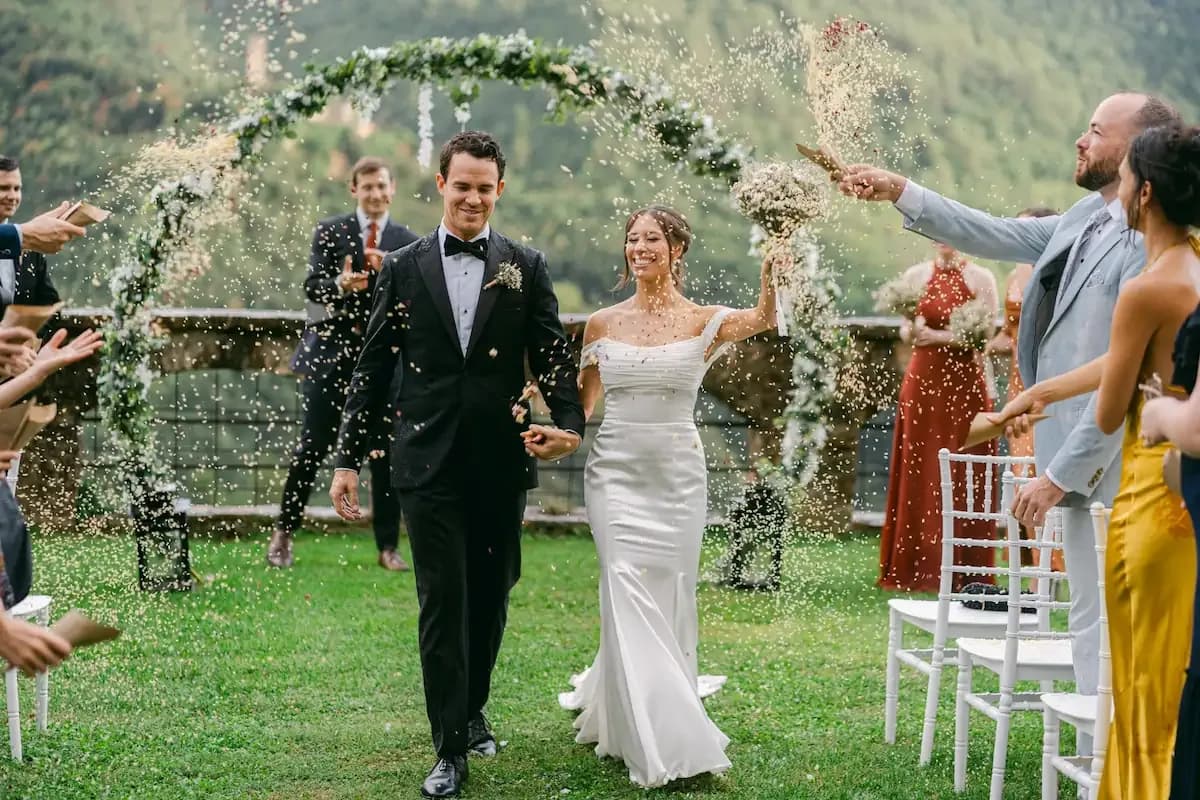
- Rice throwing: a wish for prosperity at the exit — an irreplaceable classic full of joy.
- The ribbon cutting: locals "block" the couple's way with a ribbon to cut, in exchange for a small token.
- Plate breaking: in some areas, shards that bring good luck.
The reception
- The banquet: long, abundant, with several courses and local wines. The convivial heart of the party.
- Toasts and speeches: heartfelt, often emotional.
- The tarantella: especially in the Centre-South, the traditional dance that lights up the evening.
Gifts and favours
- Bomboniere with confetti (sugared almonds, in odd numbers by tradition) as a thank-you to guests.
- La busta: the money gift to the couple, often during a dedicated dance.
Regional variations
- Tuscany: elegant restraint, great attention to food and wine.
- Umbria: intimate rituals, a strong bond with hamlets and spirituality — I cover it in the most enchanting locations in Umbria.
- Southern Italy: more exuberance, the tarantella and generous banquets.
How to weave them into your destination wedding
You don't need them all: choose two or three that truly speak to you. Prepare a short explanation for foreign guests (a card, a word from the celebrant) and rely on Italian suppliers who know them. To get your bearings on planning, read planning a wedding in Italy from abroad.
Frequently asked questions
Do I have to include Italian traditions?
No. Choose only the ones that move you: two or three authentic gestures are enough to give the day character without weighing it down.
How do I explain them to guests coming from abroad?
With a short note in the programme or a couple of words from the celebrant. Understanding a gesture's meaning makes it far more engaging.
Which traditions work best for photography?
Serenade, procession, rice throwing and the tarantella: they're the liveliest, most shared moments, so the best to tell.
Related articles
Want an Italian wedding that's authentic in the details too? Get in touch: let's choose the right rituals for your story. More ideas at Italia.it.