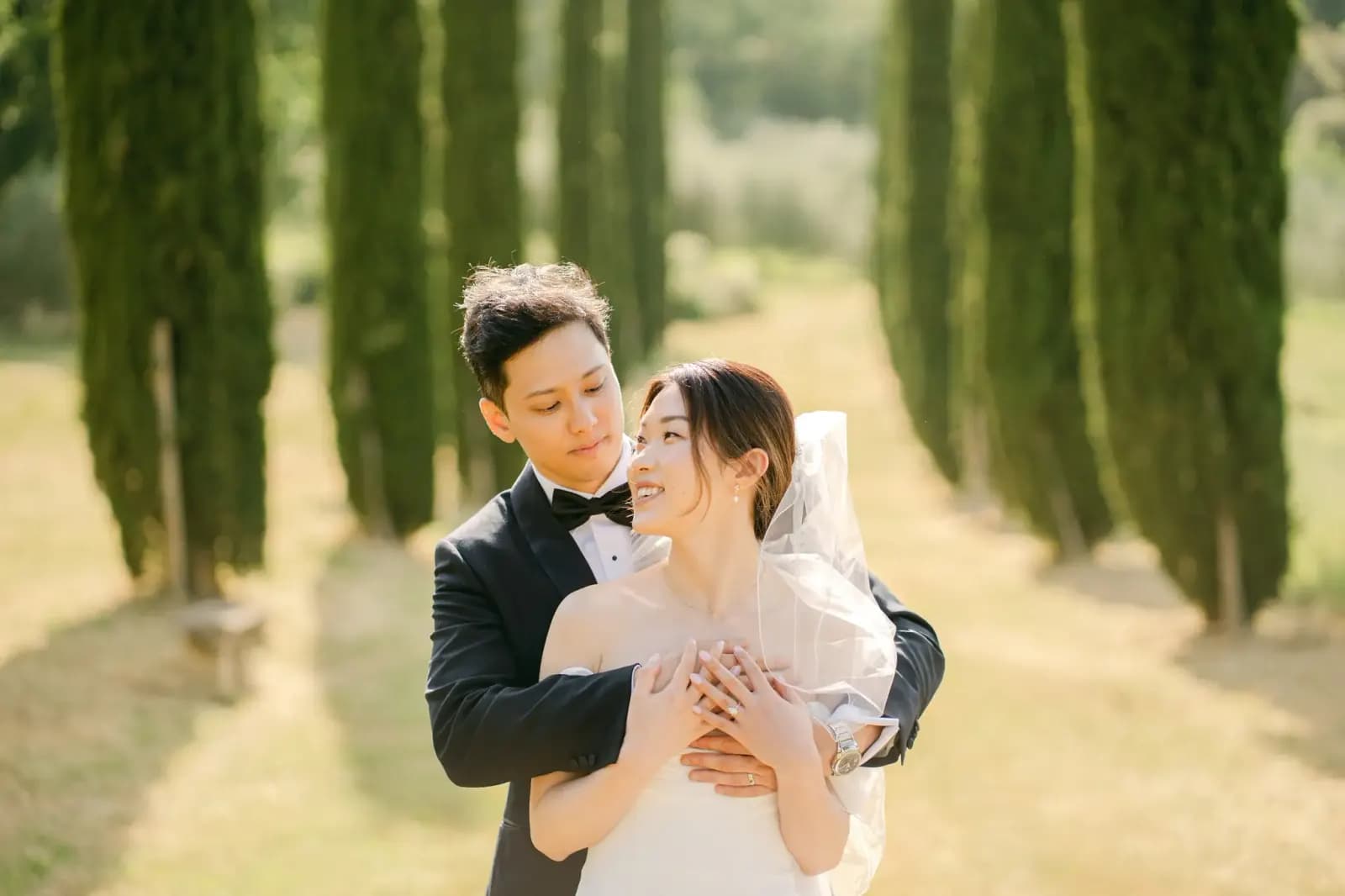
An elopement in Italy is the most private way to get married: just the two of you, or a handful of people you love, a place that moved you and a day with no seating plan. Two questions come up in almost every enquiry I receive for an elopement or an intimate wedding: should we do a first look? and how many hours of photography do we really need?
Here are my honest answers, as an elopement photographer based in Umbria who photographs elopements and small weddings across Umbria, Tuscany and the rest of Italy.
What is a first look?
A first look is the moment you see each other for the first time on your wedding day, before the ceremony, alone. No guests, no phones: one of you waits with their back turned, the other walks up, and then you turn around.
At a large wedding the first look is often a practical choice, to get the portraits done before the guests arrive. At an elopement it is something else: it is the only quiet moment of the day that belongs entirely to you, before the vows, the celebrant and the emotions of the ceremony.

How a first look works, step by step
- We choose the place together a few days before: somewhere quiet, in soft light, a few minutes' walk from where you get ready. A staircase, a cloister, a cypress avenue, an empty garden.
- One of you arrives first and waits with their back turned. I am already there, at a distance, with a long lens.
- The other walks up slowly. No countdown, no stage directions.
- You turn around when you're ready. Then you are free: talk, laugh, cry, read a letter you wrote. I stay out of the way.
- We start the portraits straight away, while you are still relaxed and the moment is fresh. Fifteen or twenty minutes are enough.

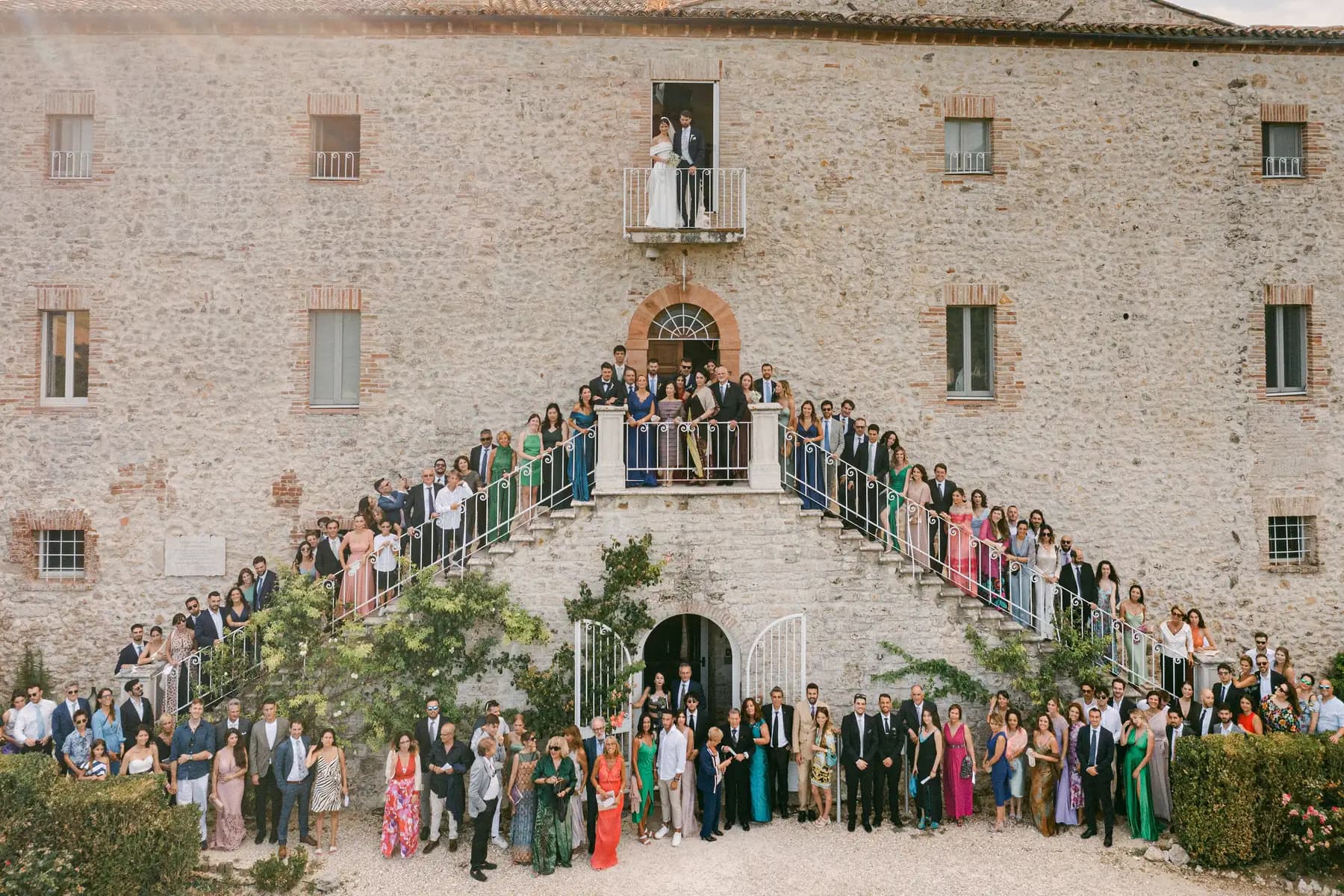
At Tenuta del Gallo, Audrey came down the villa's great staircase while James waited at the foot, with his back to her. The first look photos that came out of those ten minutes are some of the most tender of their whole day.

First look or the walk down the aisle?
They are not alternatives. If you choose a first look, the ceremony is still emotional: the difference is that you get there calmer, having already shared the first moment. If instead you want the surprise to happen at the ceremony, in front of your guests, that is just as beautiful. There is no right answer: there is the one that suits you.
A first look is especially helpful when:
- you are nervous and want to arrive at the vows calmer;
- the ceremony is late in the afternoon and you want the portraits done before sunset;
- it is an elopement with no guests, so there is no "audience" to surprise anyway;
- you want a private moment that no one else will see, only the photographs.
First look photo ideas: where to do it in Italy
The best places are quiet ones, in the shade or in soft light, a short walk from where you are staying:
- the staircase or courtyard of a villa, like at Tenuta del Gallo in Amelia;
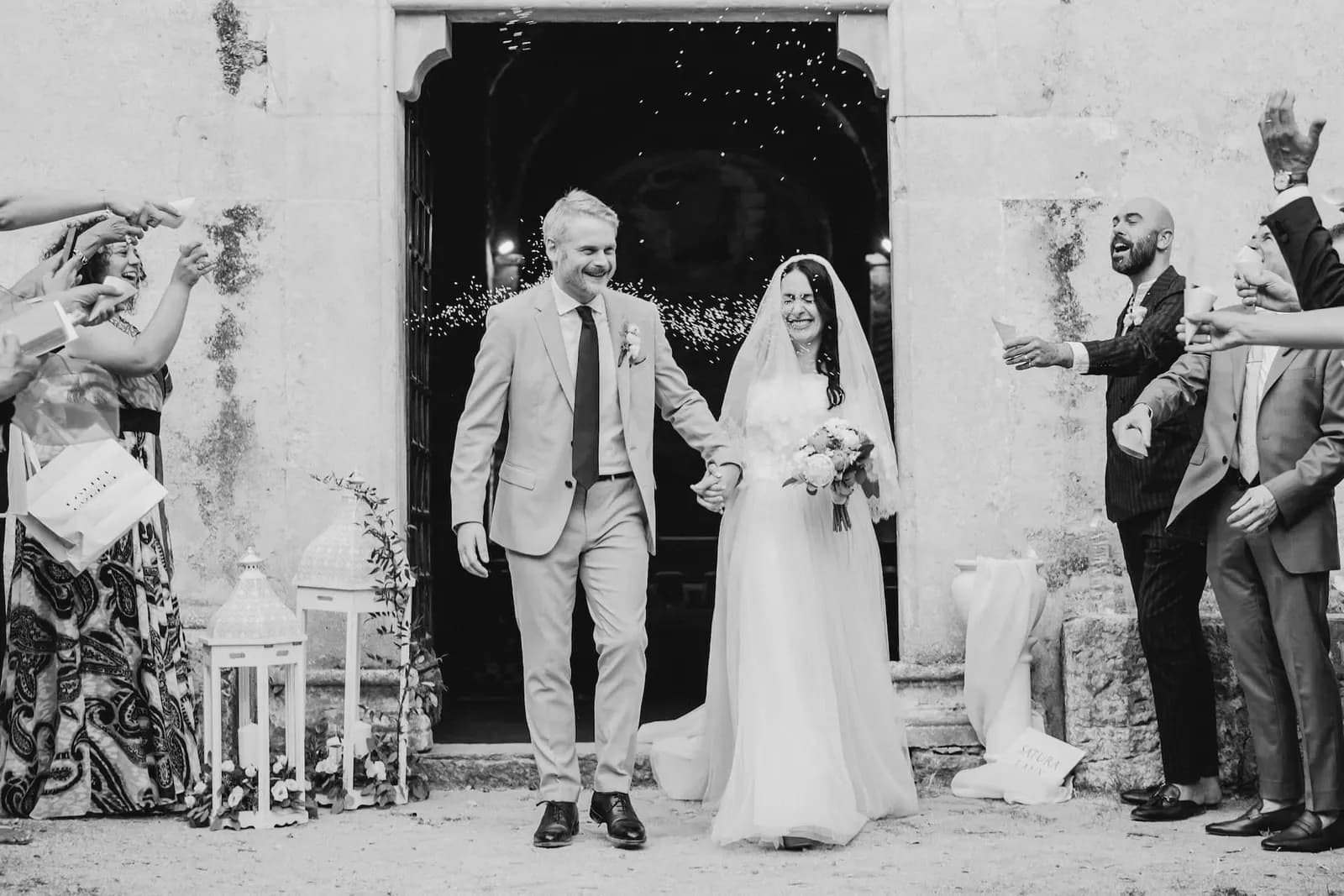
- the cloister or terrace of an abbey, like Abbazia San Pietro in Valle, with the mountains of the Valnerina in front of you;
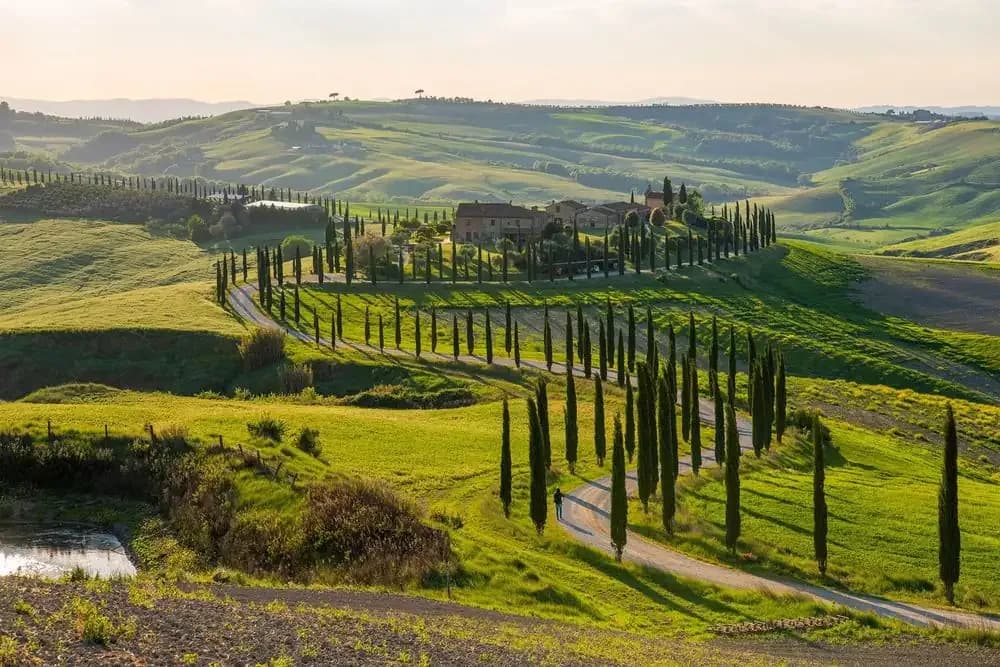
- a cypress avenue in Umbria or Tuscany, before the light turns golden;
- an empty piazza early in the morning, in Siena, Orvieto or Assisi, before the day-trippers arrive.
How many hours of photography does an elopement need?
It depends on how much of the day you want to keep. These are the three ways I photograph an elopement in Italy:
| Coverage | What it includes | Who it suits |
|---|---|---|
| 3 hours | Ceremony and couple portraits | Couples who want the essentials: the vows and the photographs to hang on the wall |
| 6 hours | Getting ready, first look, ceremony, golden hour | The most chosen: it tells the whole day, from the first look to the sunset light |
| 10 hours, over two days | From first light to the last toast, with a second photographer | Couples who want to tell more than the wedding day itself |
With six hours the story starts much earlier than the vows: the dress, the details, the last minutes before you see each other. These are the moments that a short coverage leaves out.
Why I don't go below 3 hours
I often get asked for a one or two hour session. I understand why, but for a wedding, even a very small one, I start from three hours. In two hours you barely get the ceremony and a few portraits taken in a rush, often in the harshest light of the day. With three hours there is time for the ceremony, for the hugs afterwards and for portraits without looking at the clock. If the budget is tight, I would rather suggest choosing a time closer to sunset than cutting hours.
A sample elopement timeline around sunset
The light decides everything. This example is for an elopement in Umbria in June, when the sun sets at around 8:50 pm. With six hours of coverage:
| Time | Moment |
|---|---|
| 3:00 pm | Getting ready: details, letters, the final touches |
| 4:30 pm | First look and the first portraits |
| 5:30 pm | Ceremony |
| 6:00 pm | Toast with the people who are there, or just the two of you |
| 7:30 pm | Golden hour: portraits walking through the countryside or the village |
| 9:00 pm | End of coverage, as dinner begins |
In September and October everything moves earlier, because the sun sets around 7:00 pm and then even earlier. Golden hour is the part of the timeline worth protecting: it is when the cypress avenues of Umbria and Tuscany give their best.
How to elope in Italy
To elope in Italy you have two options. A civil ceremony at the town hall is legally valid, but it needs documents prepared in advance and the time is set by the Comune. A symbolic ceremony, after a legal wedding at home, can be held anywhere and at any time: in a garden, on a hill, in front of the sea. Many couples who elope choose the second option precisely to have complete freedom over the place and the light. For the paperwork, read my guide to planning a wedding in Italy from abroad.
Elopement in Umbria or Tuscany?
Tuscany is the Italy everyone pictures: cypress roads, vineyards, the light over the hills around Siena and Florence. It is one of the regions couples ask me about most, and it really does look like that, but in high season the best-known places can be crowded.
Umbria offers the same landscapes with far fewer people: medieval villages, abbeys, olive groves and quiet roads. It is where I live, and where I photograph many of my weddings: Tenuta del Gallo near Amelia, Abbazia San Pietro in Valle in the Valnerina, Aethos Saragano among the Umbrian hills. If you are still looking for a place, start from my list of wedding venues in Umbria and my guide to the most romantic spots in Umbria for wedding photos.
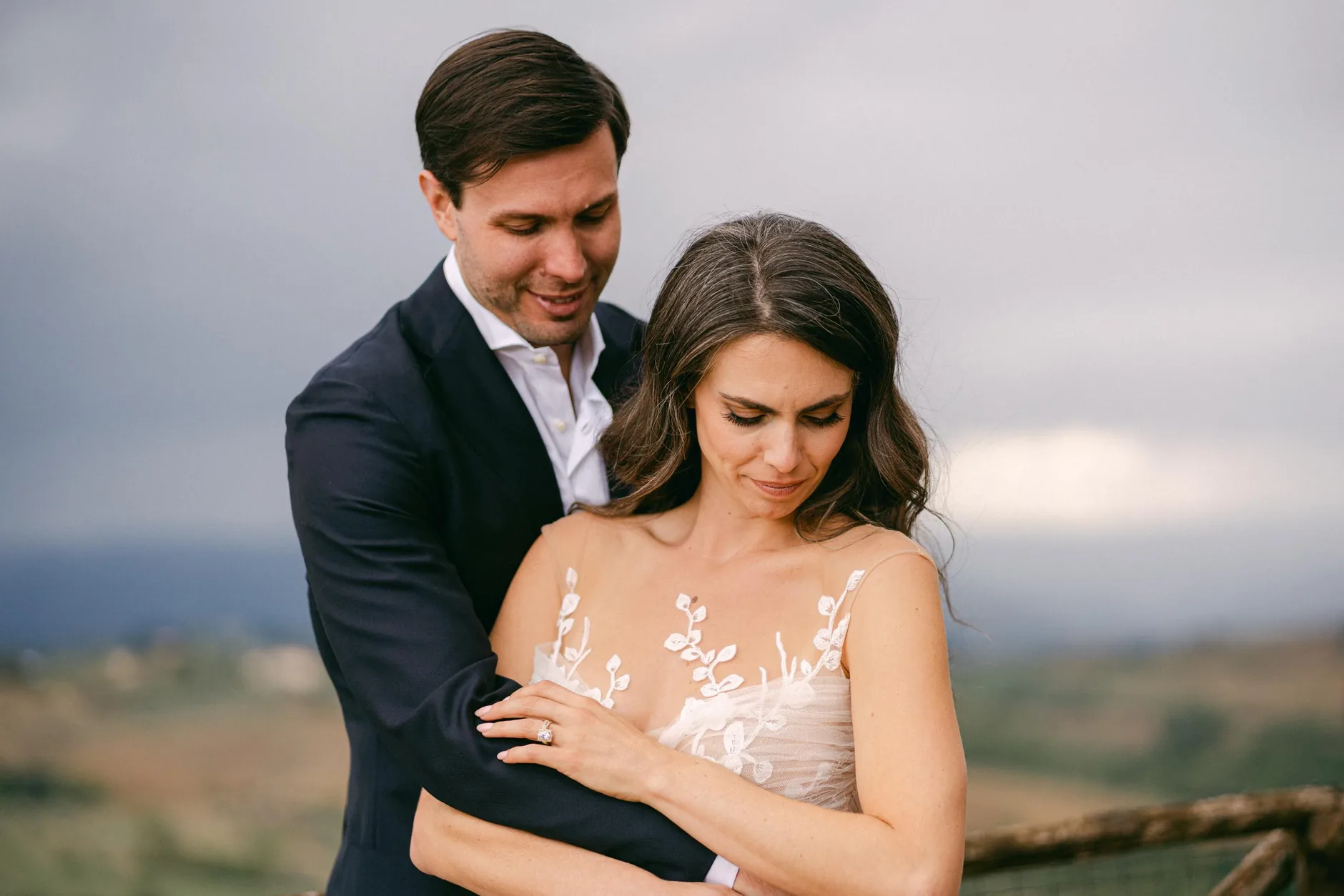
A real intimate wedding: Audrey & James
Audrey and James married at Tenuta del Gallo with just 14 guests: a first look on the staircase, a ceremony in the Italian garden with Korean rituals, portraits in the cypress avenue and a long table in the garden. It is the clearest example of how much an intimate wedding leaves room for: time, light and the people who matter. Read their story.
Frequently asked questions
What is a first look at a wedding?
It is the moment the couple see each other for the first time on the wedding day, alone, before the ceremony. One waits with their back turned, the other arrives, then they turn around. The photographer stays at a distance and photographs the reaction.
Does a first look ruin the surprise of the ceremony?
No. The ceremony stays emotional: you simply arrive calmer, having already shared the first moment. For many couples it becomes the calmest moment of the whole day.
How many hours of photography do we need for an elopement in Italy?
At least 3 hours for the ceremony and couple portraits. Around 6 hours if you also want the getting ready, the first look and the golden hour light, which is what most couples choose.
Can we book just 1 or 2 hours?
For a wedding, I start from 3 hours: in less time the photographs end up rushed and often taken in the harshest light. If budget is a concern, it is better to move the ceremony closer to sunset than to cut the coverage.
Is it better to elope in Tuscany or Umbria?
Both have cypresses, hills and villages. Tuscany is more famous and busier in high season; Umbria is quieter and often easier to have to yourselves. The right choice depends on the place that moves you, not on the region.
When is the best time of day for an elopement?
The late afternoon, two or three hours before sunset: soft light for the ceremony and golden hour for the portraits. In summer that means a ceremony around 5:30 pm; in autumn it moves earlier.